
Guide · Updated Nov 16, 2026
House settling vs foundation problems: 7 ways to tell normal settling from movement
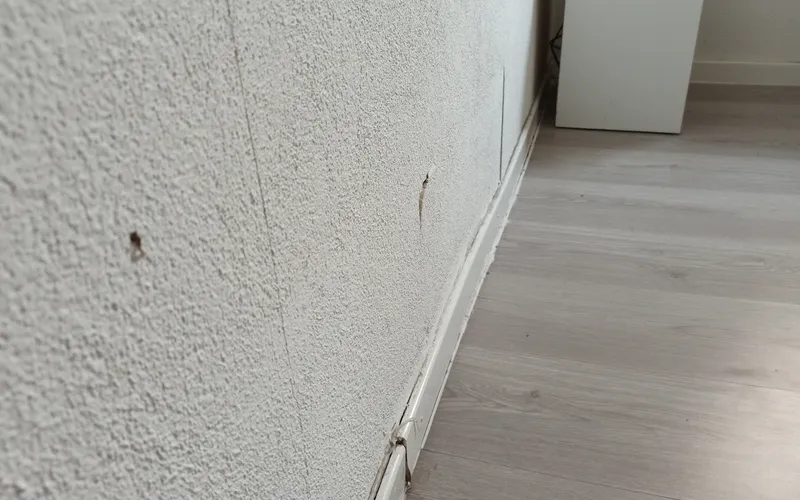

Every house settles. Angi puts it plainly: all foundations settle and crack, and normal settling leaves hairline cracks less than 1/8 inch wide that stop growing (Angi). The trick is knowing when a crack is just the house getting comfortable, and when it's the start of something you should catch early.
The story: the crack you keep staring at
Picture this (a typical scenario, not a real customer). A homeowner spots a thin crack above a bedroom door. Is it the house settling, or is it the foundation? They put a pencil mark at each end and a date beside it. Six weeks later the crack has run past the mark, and the closet door now rubs. That simple test turned a vague worry into a clear next step.
Settling vs foundation movement: the key difference
TREC's guidance for Texas inspectors separates uniform settlement, where the whole foundation settles evenly and is "generally not harmful," from differential settlement, where one part settles more than another and can lead to cracks and misalignment (TREC). Angi adds that even settlement of 2 to 3 inches after construction is usually not a big deal; uneven settlement is the problem (Angi).
7 checks: normal settling or a foundation problem?
| Check | Usually normal settling | Points to foundation movement |
|---|---|---|
| Crack width | Hairline, under 1/8 inch | 1/8 inch or wider |
| Crack behavior | Formed early, then stopped | Keeps growing or appears years later |
| Crack direction | Straight, even on both sides | Diagonal from door/window corners, horizontal, or one side higher |
| Where it runs | Stays on one surface | Runs around corners or from slab to wall |
| Doors and windows | Open and latch normally | Bind, won't latch, or are out of square |
| Floors | Flat to the eye | Noticeable slope or a hump |
| Pattern | Even across the house | Concentrated on one side (uneven movement) |
Sources: Angi, Foundation Problems vs. Settling: How to Tell the Difference (updated Aug 1, 2026); TREC, Rendering an Opinion of Foundation Performance: A Guide for Texas Inspectors (Apr 29, 2025); FPA Homebuyers' Guide (diagonal drywall cracks at window and door corners are "significant indicators" of excessive movement; small hairline cracks are most often initial settling, drywall installation or wood shrinkage).
The pencil-mark test (free, takes a minute)
- Mark both ends of the crack with a pencil and write the date.
- Photograph it next to a coin or ruler so you can compare width later.
- Check again every few weeks, especially after a dry spell or heavy rain.
- If it grows, widens to 1/8 inch or more, or new symptoms show up, get an inspection.
Engineers do the professional version: the FPA guide notes a second floor-elevation survey taken six to twelve months after the first can show whether movement is ongoing (FPA).
Why San Antonio houses "settle" more than most
Most Bexar County soil is Blackland Prairie clay that expands when wet and shrinks when dry; that shrink-swell is the primary reason for foundation issues in the county (Texas Master Naturalist). Texas regulators note high moisture can cause heave and low moisture settlement (TDLR). So "settling" here can come back with every drought. Read San Antonio expansive clay soil, foundation settlement repair, foundation heave and signs you need foundation repair.
When to stop watching and get it checked
- A crack reaches 1/8 inch or keeps growing (Angi)
- Doors stick or won't latch, or floors slope
- Cracks run diagonally from door or window corners, or through brick
- New cracks in the ceiling or walls appear together
Angi's 2026 national average for a foundation inspection is $600 (Angi). See what happens at an inspection.
Track it before you decide: how to monitor a foundation crack.
Door and window corners are the first place to look: cracks above door frames and around windows.
Your offer: a free second set of eyes
LevelSATX Foundation Network matches you with one vetted, independent network partner for a free foundation inspection and a written quote if work is needed. If it's just settling, you'll hear that too. We are a referral service and do not perform repairs; partners pay us for referrals, and any company can apply to join the network.
Want a real number for your home?
Calculators and guides give ranges. A free inspection from one vetted, independent local contractor gives you a written quote. No cost, no obligation.
Get my free inspection →Or call (210) 796-7891.
Frequently asked questions
Is it normal for a house to settle?
Yes. Angi says all foundations settle, usually in the first few years after construction, and normal settling typically shows up as hairline cracks less than 1/8 inch wide that stop growing. TREC's inspector guidance adds that uniform settlement, where the whole foundation settles evenly, is generally not harmful.
How do I know if it's settling or a foundation problem?
Watch the cracks and the doors. Angi says cracks of 1/8 inch or more, cracks that keep growing for years or appear long after construction, horizontal or diagonal wall cracks, and cracks that run around corners point to a foundation issue rather than settling. Sloping floors and doors that bind are other indicators TREC lists.
How much settling is too much?
Angi says 2 to 3 inches of even settlement after construction is usually not a big deal; uneven settlement is the concern. The Foundation Performance Association's homebuyers' guide says a foundation should typically vary no more than about 1.5 inches over its length and width when built, so more than that together with distress may indicate differential movement.
Can an older house still settle?
Angi says houses can still settle after 50 years, though most settling happens in the first few years. New cracks, sloping floors or sudden problems in an older home deserve an inspection. In San Antonio clay, soil moisture swings can move a foundation at any age.
Who can tell me for sure?
A foundation inspection with floor elevation readings, or a licensed professional engineer. LevelSATX Foundation Network can match you with one vetted, independent network partner for a free inspection and written findings.
Keep reading
- Foundation repair cost in San Antonio: the 2026 guide
- Pier and beam vs slab foundation repair: cost, pros and cons
- 7 signs you need foundation repair in San Antonio
- Steel vs concrete piers: costs and trade-offs compared
- Foundation repair methods compared: what each costs and when it fits
- How to choose a foundation repair company in San Antonio: a checklist
- Slab leak repair in San Antonio: signs, 2026 costs and what to do first
- Best foundation repair in San Antonio: 10 criteria to verify
- Foundation repair warranty details: what lifetime and transferable really mean
- How to compare foundation repair companies in San Antonio
- 12 foundation repair red flags in quotes, sales tactics and warranties
- Slab leak detection: how pros find under-slab leaks and what it costs
- Questions to ask a foundation repair company (with good answers)
- Pier and beam foundation repair: how it works and what it costs
- Foundation repair scams: 9 tactics to avoid before you sign
- Is foundation repair licensed in Texas? What to check instead
- How to compare foundation repair quotes: a side-by-side worksheet
- Foundation repair second opinion: when it's worth it and how to get one
- How to read foundation repair company reviews without getting fooled
- 8 signs of a bad foundation repair and what to do next
- What's the best foundation repair method? A decision table for San Antonio homes
- Foundation crack repair: which cracks are cosmetic and which need a pro
- Horizontal foundation cracks: why they matter and what to do next
- Slab leak repair cost in 2026: calculator and price table
- Crawl space foundation repair cost: 2026 ranges by repair and size
- Best foundation repair companies and services: 10 things they have in common
- Helical piers cost vs push piers vs concrete piers: cost and fit compared
- Foundation settlement repair: causes, fixes and 2026 costs
- San Antonio expansive clay soil: why it moves foundations, with cited sources
- Foundation inspection cost: what you pay in 2026 (and when it’s free)
- Foundation underpinning: what it is, what it costs and when you need it
- Foundation heave: signs, causes and fixes in San Antonio clay
- Foundation leak repair: leaks through vs under your foundation, and who fixes what
- 7 ways to pay for foundation repair in Texas, with the fine print
- Is foundation repair worth it? Cost, resale and Texas disclosure rules
- How long does foundation repair take? A step-by-step timeline
- Foundation repair contractors: 9 things to verify before you hire one in Texas
- Concrete slab crack repair: shrinkage cracks vs movement cracks, and the fix for each
- Epoxy injection for foundation cracks: when it works and when it hides a bigger problem
- Structural vs cosmetic foundation repair: how to tell which one your home needs
- Foundation damage repair: fixing drywall, doors and floors after the foundation is stable
- Cracks in the garage floor and garage foundation repair: what each fix costs in 2026
- Affordable foundation repair: 7 honest ways to pay less without cutting corners
- What happens at a foundation repair inspection: a step-by-step walkthrough
- Pier foundation repair: pier types, 2026 costs and which one fits your home
- Foundation repair specialist vs structural engineer: who to call first
- Foundation crack repair cost in 2026: by crack type and repair method
- Foundation crack repair kits: when a DIY kit works and when to call a pro
- How to read a foundation repair estimate, line by line
- French drain cost in 2026, and when a drain actually protects your foundation
- Concrete foundation repair: 7 common fixes, ranked from cheapest to most involved
- Mudjacking vs polyjacking: what each costs, how long it lasts, and when neither is enough
- Does homeowners insurance cover a slab leak? What Texas policies usually pay for
- 9 signs of a slab leak, plus the 2-hour meter test and when to check the foundation
- How to water your foundation with a soaker hose in San Antonio clay (and stay within SAWS rules)
- Drilled and bell-bottom concrete piers vs pressed pilings and steel piers
- Selling a house with foundation problems in Texas: disclose, repair, credit or sell as-is
- Hydrostatic plumbing test: what it is and when to get one around foundation repair
- Post-tension slab foundations: how they work, warning signs, and repair cautions
- Tree roots and foundation damage in clay soil: what really happens and what helps
- Buying a house with foundation problems in Texas: a buyer's checklist
- Ceiling cracks: which ones point to the foundation, and which are just drywall
- Foundation shims and reshimming: how pier and beam houses get re-leveled
- Sagging and bouncy floors: causes, joist repair and what it costs
- Foundation vents and crawl space ventilation: open, closed or sealed?
- Foundation maintenance: 11 tips for San Antonio clay soil
- How to monitor a foundation crack and tell if it's growing
- Foundation repair permits in San Antonio: who pulls them and what's required
- Foundation drainage: downspouts, grading and drains for clay soil
- The foundation repair process, step by step (San Antonio)
- Floor joist repair: sistering vs replacing, and what it costs
- Sinking porch or porch pulling away from the house: causes, fixes and cost
- Chimney separating from the house: what it means and how it's fixed
- Foundation plants: how far from the house, and what helps a clay-soil foundation
- Block and base foundation repair: how it's built, why it sags, how it's fixed
- Cracks above door frames and around windows: when they point to the foundation
- Soil pulling away from the foundation: what the gap means and what to do
- Vertical foundation cracks: when they're normal and when they're not
- Water in the crawl space: what it means for the foundation and what fixes cost
- Foundation replacement cost in 2026, and why repair is usually the answer
- Foundation inspection checklist: 20 things to check outside, inside and underneath
- Nail pops in drywall: what causes them and when they point to the foundation
- Does a home warranty cover foundation repair? Home warranty vs insurance vs repair warranty in Texas
- Foundation elevation survey: what it measures and how much movement is acceptable
- Foundation cracks in a new home: what's normal, what isn't, and your Texas builder options
- Cracks in stucco: which ones are cosmetic and which point to the foundation
- Countertops or cabinets separating from the wall: 6 causes and when it's the foundation
- Foundation repair on a historic San Antonio home: 7 things to know before work starts
- Cracked floor tiles: how to tell an impact crack from a foundation crack
- Foundation repair cost calculator
- House leveling and pier cost calculator
Sources cited on this page: Angi, How Much Does Foundation Repair Cost? (updated Oct 26, 2026); Angi, How Much Does Pier and Beam Foundation Repair Cost? (updated Sep 18, 2026); Angi, Foundation Problems vs. Settling: How to Tell the Difference (updated Aug 1, 2026); Angi, Foundation Settlement: What It Is, Types, and Causes (updated Jul 9, 2026); TREC, Rendering an Opinion of Foundation Performance: A Guide for Texas Inspectors (Apr 29, 2025); Foundation Performance Association, FPA-SC-06-0: Homebuyers' Guide for Foundation Evaluation (Rev. 0, Oct 10, 2005; PDF); Angi, How Much Does a Foundation Inspection Cost? (2026 data, updated Oct 27, 2026); Texas Master Naturalist, Alamo Area Chapter: Bexar County Soils; Texas Dept. of Licensing & Regulation, Technical Bulletin IHB TB 10-01 (Foundations on Expansive Soils). Cost figures are national, not San Antonio quotes.
LevelSATX Foundation Network connects San Antonio homeowners and commercial property owners with vetted, independent foundation repair contractors. We don't perform repairs; participating contractors pay us for referrals. Any company can apply to join the network.