
Guide · Updated Nov 20, 2026
Foundation cracks in a new home: what's normal, what isn't, and your Texas builder options
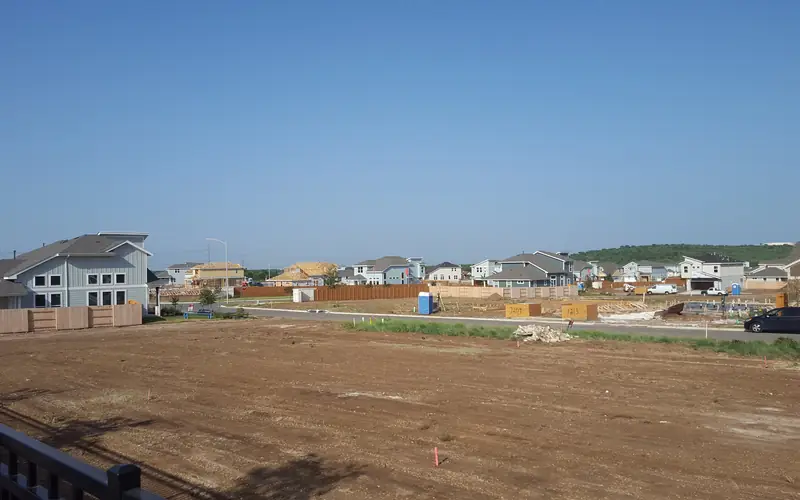

You closed on a brand-new house, and a year later there's a crack in the garage slab. Panic is optional: the Concrete Foundations Association says cracks in concrete are a common occurrence and most shouldn't be a cause for alarm (CFA). But some cracks are worth putting in writing to your builder, and in Texas the timing of that letter matters (Texas State Law Library).
The story: the crack that was fine, and the one that wasn't
Picture this (a typical scenario, not a real customer). Two neighbors in the same new subdivision each find a garage-floor crack in year one. One is hairline and stays that way for a year of photos. The other widens past a quarter inch, and the back door starts to stick. Same builder, same street. The first is shrinkage; the second deserves an inspection and a certified letter.
Why new slabs crack
Concrete shrinks as the water in the mix evaporates and moves with temperature. The CFA says shrinkage and temperature cracks are most often vertical to diagonal and that reentrant cracks from window corners and beam pockets are very common and, unless they leak or show significant lateral displacement, of no structural concern (CFA). The American Concrete Institute also says some cracking is normal (ACI).
Movement starts early too. The FPA's foundation-movement guideline says that in most cases movement begins the day the concrete is placed and is likely to continue for the life of the building, and that new foundations are rarely level (FPA-SC-13-1).
Sort your cracks
| What you see | Likely cause | Next step |
|---|---|---|
| Thin vertical or diagonal crack in the slab or garage floor, no offset | Drying shrinkage (CFA) | Photograph, date, monitor |
| Crack from the corner of a window or beam pocket in a foundation wall | Reentrant shrinkage crack, very common (CFA) | Monitor; act if it leaks or offsets |
| Crack wider than 1/4 inch, or one side offset 1/4 inch | Possible movement (CFA) | Inspection, written notice to builder |
| Long horizontal crack | Likely an applied load (CFA) | Inspection |
| Diagonal drywall cracks at door/window corners, sticking doors | Significant indicators of movement (FPA) | Inspection plus elevation survey |
Sources: Concrete Foundations Association, Tech Note TN-004: Cracking in Concrete Walls; Foundation Performance Association, FPA-SC-06-0: Homebuyers' Guide for Foundation Evaluation (Rev. 0, Oct 10, 2005; PDF).
Track the borderline ones: pencil the ends, date them, and photograph with a ruler (see crack monitoring). More on crack direction in vertical vs hairline foundation cracks and horizontal cracks.
Your builder options in Texas
1. Read your paperwork. The FPA describes the Texas Residential Construction Commission as defunct (sunsetted) (FPA-SC-13-1), so coverage comes from your contract and any written builder warranty. Note the structural coverage term, exclusions and the claim steps.
2. Know the RCLA notice rules. Under Property Code chapter 27, before suing over a construction defect you must give the contractor written notice by certified mail, return receipt requested, describing the defects in reasonable detail at least 60 days before filing. The builder can ask to inspect during the 35 days after notice (up to three inspections) and may make a written settlement offer within 60 days; an offer not accepted within 25 days is considered rejected (Texas State Law Library; Prop. Code ch. 27). This is general information, not legal advice; a Texas attorney can tell you how it applies to you.
3. Get independent evidence. A third-party inspection with an elevation survey documents what you're claiming. The FPA recommends buyers get a baseline elevation survey in case movement occurs later (FPA-SC-13-1).
Don't make it worse while you wait
Keep soil moisture even around the slab and water draining away from it; see foundation drainage and 11 foundation maintenance tips. Hold off on cosmetic patching of wall cracks until the cause is known, so the evidence stays visible.
Your offer: an independent second look, free
Not sure whether to call the builder? LevelSATX Foundation Network matches you with one vetted, independent network partner for a free foundation inspection and a written quote if work is needed, which you can keep for your records. We are a referral service and don't do repairs or give legal advice; partners pay us for referrals, and any company can apply to join the network.
Want a real number for your home?
Calculators and guides give ranges. A free inspection from one vetted, independent local contractor gives you a written quote. No cost, no obligation.
Get my free inspection →Or call (210) 796-7891.
Frequently asked questions
Is it normal for a new house foundation to crack?
Some cracking is. The Concrete Foundations Association says cracks in concrete are a common occurrence and most shouldn't be a cause for alarm; shrinkage cracks are usually vertical to diagonal and, unless they leak or show significant lateral displacement, are of no structural concern. The American Concrete Institute also says some cracking is normal.
When is a crack in a new foundation a problem?
The CFA says it's probably time for professional help when a crack is wider than 1/4 inch, shows 1/4 inch of lateral displacement, leaks water, or when you find long horizontal cracks. Diagonal cracks at door and window corners are significant indicators of movement, per the Foundation Performance Association.
How do I make a foundation defect claim against a Texas builder?
Under the Residential Construction Liability Act (Property Code ch. 27), you send written notice by certified mail, return receipt requested, describing the defects at least 60 days before filing suit. The builder can ask to inspect during the 35 days after receiving notice (up to three inspections) and can make a written settlement offer within 60 days. Talk to a Texas attorney about your situation.
Does Texas have a state new-home warranty?
Not anymore. The Foundation Performance Association's guideline describes the Texas Residential Construction Commission as defunct (sunsetted). Your coverage comes from your contract and any written builder warranty, so read those first.
Should I get my own inspection on a new house?
It helps. An independent inspection documents the cracks with dates and photos, and an elevation survey gives a baseline. The FPA recommends buyers obtain a baseline elevation survey in case movement happens later.
Keep reading
- Foundation repair cost in San Antonio: the 2026 guide
- Pier and beam vs slab foundation repair: cost, pros and cons
- 7 signs you need foundation repair in San Antonio
- Steel vs concrete piers: costs and trade-offs compared
- Foundation repair methods compared: what each costs and when it fits
- How to choose a foundation repair company in San Antonio: a checklist
- Slab leak repair in San Antonio: signs, 2026 costs and what to do first
- Best foundation repair in San Antonio: 10 criteria to verify
- Foundation repair warranty details: what lifetime and transferable really mean
- How to compare foundation repair companies in San Antonio
- 12 foundation repair red flags in quotes, sales tactics and warranties
- Slab leak detection: how pros find under-slab leaks and what it costs
- Questions to ask a foundation repair company (with good answers)
- Pier and beam foundation repair: how it works and what it costs
- Foundation repair scams: 9 tactics to avoid before you sign
- Is foundation repair licensed in Texas? What to check instead
- How to compare foundation repair quotes: a side-by-side worksheet
- Foundation repair second opinion: when it's worth it and how to get one
- How to read foundation repair company reviews without getting fooled
- 8 signs of a bad foundation repair and what to do next
- What's the best foundation repair method? A decision table for San Antonio homes
- Foundation crack repair: which cracks are cosmetic and which need a pro
- Horizontal foundation cracks: why they matter and what to do next
- Slab leak repair cost in 2026: calculator and price table
- Crawl space foundation repair cost: 2026 ranges by repair and size
- Best foundation repair companies and services: 10 things they have in common
- Helical piers cost vs push piers vs concrete piers: cost and fit compared
- Foundation settlement repair: causes, fixes and 2026 costs
- San Antonio expansive clay soil: why it moves foundations, with cited sources
- Foundation inspection cost: what you pay in 2026 (and when it’s free)
- Foundation underpinning: what it is, what it costs and when you need it
- Foundation heave: signs, causes and fixes in San Antonio clay
- Foundation leak repair: leaks through vs under your foundation, and who fixes what
- 7 ways to pay for foundation repair in Texas, with the fine print
- Is foundation repair worth it? Cost, resale and Texas disclosure rules
- How long does foundation repair take? A step-by-step timeline
- Foundation repair contractors: 9 things to verify before you hire one in Texas
- Concrete slab crack repair: shrinkage cracks vs movement cracks, and the fix for each
- Epoxy injection for foundation cracks: when it works and when it hides a bigger problem
- Structural vs cosmetic foundation repair: how to tell which one your home needs
- Foundation damage repair: fixing drywall, doors and floors after the foundation is stable
- Cracks in the garage floor and garage foundation repair: what each fix costs in 2026
- Affordable foundation repair: 7 honest ways to pay less without cutting corners
- What happens at a foundation repair inspection: a step-by-step walkthrough
- Pier foundation repair: pier types, 2026 costs and which one fits your home
- Foundation repair specialist vs structural engineer: who to call first
- Foundation crack repair cost in 2026: by crack type and repair method
- Foundation crack repair kits: when a DIY kit works and when to call a pro
- How to read a foundation repair estimate, line by line
- French drain cost in 2026, and when a drain actually protects your foundation
- Concrete foundation repair: 7 common fixes, ranked from cheapest to most involved
- Mudjacking vs polyjacking: what each costs, how long it lasts, and when neither is enough
- Does homeowners insurance cover a slab leak? What Texas policies usually pay for
- 9 signs of a slab leak, plus the 2-hour meter test and when to check the foundation
- How to water your foundation with a soaker hose in San Antonio clay (and stay within SAWS rules)
- Drilled and bell-bottom concrete piers vs pressed pilings and steel piers
- Selling a house with foundation problems in Texas: disclose, repair, credit or sell as-is
- House settling vs foundation problems: 7 ways to tell normal settling from movement
- Hydrostatic plumbing test: what it is and when to get one around foundation repair
- Post-tension slab foundations: how they work, warning signs, and repair cautions
- Tree roots and foundation damage in clay soil: what really happens and what helps
- Buying a house with foundation problems in Texas: a buyer's checklist
- Ceiling cracks: which ones point to the foundation, and which are just drywall
- Foundation shims and reshimming: how pier and beam houses get re-leveled
- Sagging and bouncy floors: causes, joist repair and what it costs
- Foundation vents and crawl space ventilation: open, closed or sealed?
- Foundation maintenance: 11 tips for San Antonio clay soil
- How to monitor a foundation crack and tell if it's growing
- Foundation repair permits in San Antonio: who pulls them and what's required
- Foundation drainage: downspouts, grading and drains for clay soil
- The foundation repair process, step by step (San Antonio)
- Floor joist repair: sistering vs replacing, and what it costs
- Sinking porch or porch pulling away from the house: causes, fixes and cost
- Chimney separating from the house: what it means and how it's fixed
- Foundation plants: how far from the house, and what helps a clay-soil foundation
- Block and base foundation repair: how it's built, why it sags, how it's fixed
- Cracks above door frames and around windows: when they point to the foundation
- Soil pulling away from the foundation: what the gap means and what to do
- Vertical foundation cracks: when they're normal and when they're not
- Water in the crawl space: what it means for the foundation and what fixes cost
- Foundation replacement cost in 2026, and why repair is usually the answer
- Foundation inspection checklist: 20 things to check outside, inside and underneath
- Nail pops in drywall: what causes them and when they point to the foundation
- Does a home warranty cover foundation repair? Home warranty vs insurance vs repair warranty in Texas
- Foundation elevation survey: what it measures and how much movement is acceptable
- Cracks in stucco: which ones are cosmetic and which point to the foundation
- Countertops or cabinets separating from the wall: 6 causes and when it's the foundation
- Foundation repair on a historic San Antonio home: 7 things to know before work starts
- Cracked floor tiles: how to tell an impact crack from a foundation crack
- Foundation repair cost calculator
- House leveling and pier cost calculator
Sources cited on this page: Angi, How Much Does Foundation Repair Cost? (updated Oct 26, 2026); Angi, How Much Does Pier and Beam Foundation Repair Cost? (updated Sep 18, 2026); Concrete Foundations Association, Tech Note TN-004: Cracking in Concrete Walls; American Concrete Institute, FAQ: Acceptable concrete cracking; Foundation Performance Association, FPA-SC-13-1: Guidelines for the Evaluation of Foundation Movement for Residential and Other Low-Rise Buildings (Rev. 1, Apr 11, 2015; PDF); Foundation Performance Association, FPA-SC-06-0: Homebuyers' Guide for Foundation Evaluation (Rev. 0, Oct 10, 2005; PDF); Texas State Law Library, Construction Defects (Residential Construction Liability Act, Property Code ch. 27); Texas Property Code, Chapter 27: Residential Construction Liability; Texas Master Naturalist, Alamo Area Chapter: Bexar County Soils; Texas Dept. of Licensing & Regulation, Technical Bulletin IHB TB 10-01 (Foundations on Expansive Soils). Cost figures are national, not San Antonio quotes.
LevelSATX Foundation Network connects San Antonio homeowners and commercial property owners with vetted, independent foundation repair contractors. We don't perform repairs; participating contractors pay us for referrals. Any company can apply to join the network.